Why a Documented Property Walk Beats Reactive Repair Calls
The Maintenance Shield Program replaces scattered emergency calls with one documented walk, one report and one vendor.
October 17, 2026 · 4 min read
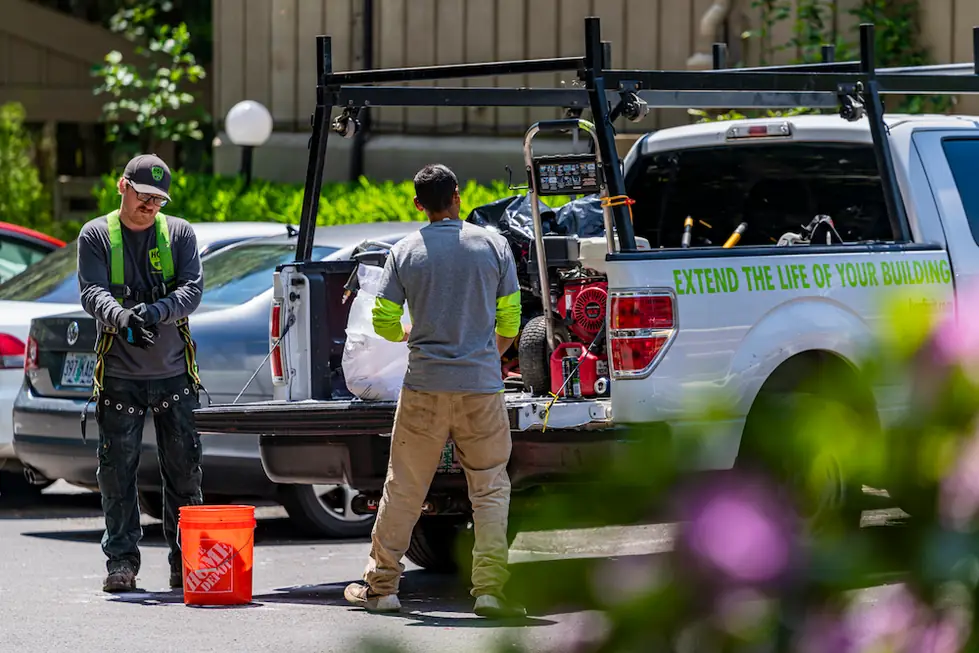
Most multifamily and community association properties run on the same loop. Something fails, a resident or a board member notices, a manager calls a vendor, and the vendor shows up to fix that one thing. The cycle works well enough until a wet Pacific Northwest winter lines up three or four failures in the same month. Then the manager is juggling several vendors, several invoices and a board that wants to know why nobody saw it coming.
A documented property walk breaks that loop. Instead of waiting for symptoms, someone qualified walks the buildings, the common areas and the grounds, writes down what they find, and attaches a recommended timeframe to each item. That written record is the core of the Maintenance Shield Program offered by HOA Services in Tigard, and it is the reason proactive maintenance is easier to run than reactive maintenance, even though it sounds like more work.
What a reactive month looks like
Reactive maintenance has a rhythm that managers know well. Monday brings an email about water stains on a ceiling. Wednesday brings a call about a gutter overflowing onto a walkway. Friday brings a photo of a moss-covered stair tread. Each problem is real, and each one gets handled, but nobody is looking at the property as a whole. The roof, the siding, the decks and the drainage are all connected, and a failure in one often shows up in another.
The other cost of reacting is timing. Repairs ordered during a storm compete with every other property in the Portland area for the same crews. Materials get substituted, access gets complicated by wet weather, and the board hears about the problem after the damage has spread. A job that would have been a small repair in September becomes a larger one in January.
What the property walk produces
Under the Maintenance Shield Program, an expert walks the property and documents the buildings, common areas and grounds. The output is a customized summary report with recommended services and timeframes. In-depth estimates are available on request for any line item the board wants to price out.
That report changes the conversation in a board meeting. Instead of a list of complaints, directors see a list of conditions, ordered by what needs attention first. Some items are routine, like gutter and downspout cleaning or siding washing. Some are inspection items, like a crawl space or an attic that deserves a closer look. Some point toward repair work, like caulk seams that have pulled away or a deck rail that moves when it shouldn't. The board can decide what to approve now, what to schedule for spring, and what to track.
- Buildings: siding, trim, caulk seams, vents, windows and doors, rooflines and eaves.
- Common areas: stairs, decks, walkways, trash enclosures, lighting, signs and parking areas.
- Grounds: drainage paths, downspout outlets, areas where moss and debris collect, and fencing or gates.
One vendor, one point of contact
The program covers janitorial, maintenance and repair work in a single routine, which matters more than it sounds. When five vendors handle five trades, nobody owns the interactions between them. The pressure washer doesn't know about the failing caulk, and the gutter cleaner doesn't know the downspout dumps against a foundation. With one vendor, the same people who document a condition can schedule the fix.
Each community is assigned one account executive, and that person is the only one who contacts you. Managers who have tried to coordinate several companies tend to value that more than any single line in a service list. Requests become job tickets, technicians take before, during and after photos, and the account executive emails a status update with the photo record attached. The paper trail that results is useful later, at reserve study time or when an insurance question comes up.
Turning the report into a seasonal calendar
A report is only as useful as the schedule behind it. The account executive builds an annual seasonal calendar from the walk. In the Portland area, spring typically carries roof, gutter and downspout cleaning, pressure washing and parking lot maintenance. Winterization, dryer vent cleaning and sign repair slot in where they fit around those anchors, and a second look at drainage before the heavy rain starts is a sensible fall addition.
Pre-scheduled crews also mean priority during the busy seasons. A board that has approved its calendar in advance isn't asking for an opening in the middle of April, when every community on the east side of town wants its roof and gutters done in the same two weeks.
How a board or manager gets started
The first step is a conversation with an account executive, followed by a site visit and a property-specific seasonal assessment. Proposals for maintenance, janitorial and repairs work are free. A manager with a single community can start there, and a manager with a whole portfolio can set up every property under the same process.
If you already have a reserve study, the walk report is a useful companion to it. The reserve study looks years ahead at large components. The walk report looks at this year's conditions and the routine work that keeps those components from wearing out early. Together they give a board a long view and a near view.
To talk through a property walk for your community, call HOA Services at (503) 620-8386, Monday through Friday, 7:30 am to 4 pm. The proposal is free, and you decide which recommendations to approve.
HOA Maintenance Services, (503) 620-8386
Call (503) 620-8386More articles
Where Water Gets Into Multifamily Buildings in a Wet Northwest Winter
Caulk seams, decks, gutters, crawl spaces, attics and siding: where moisture finds a way in, and how a leak investigation is run from the first report.
Dryer Vent Cleaning on Multifamily Buildings: Method, Schedule and Notices
Lint builds up where residents can't see it. Here is how exterior dryer vent cleaning works on a multi-unit building and how to schedule it without chaos.