Repairs · Attics
Attic Remediation
Moisture, mold and pest damage cleaned out of attics on multifamily and HOA buildings around Portland, with a photo record and one account executive.
Warm air, cold sheathing, and what the board notices first
Attics around Portland run on a narrow margin. Warm air from the units below rises, meets cold roof sheathing during a long wet winter, and condenses. Where airflow is poor that moisture lingers, and the first sign a manager sees is seldom in the attic itself: it is a stain on an upper ceiling, a musty smell on a top-floor landing, or a resident reporting scratching overhead.
Wood that stays damp does not stay sound. Sheathing darkens, framing softens, and mold finds a place to grow on the underside of the roof deck. Pests add a second problem on top of the first: mice and rats nest in insulation, leave droppings, and chew at framing and wiring. A small leak and a small infestation can share one attic and feed each other for years.
Because nobody climbs up there on a routine day, the damage tends to arrive as a surprise and a larger scope than anyone budgeted. That is the argument for looking early. A property with an attic inspection on its calendar finds the wet insulation or the choked vent while it is still a repair ticket and not a rebuild.
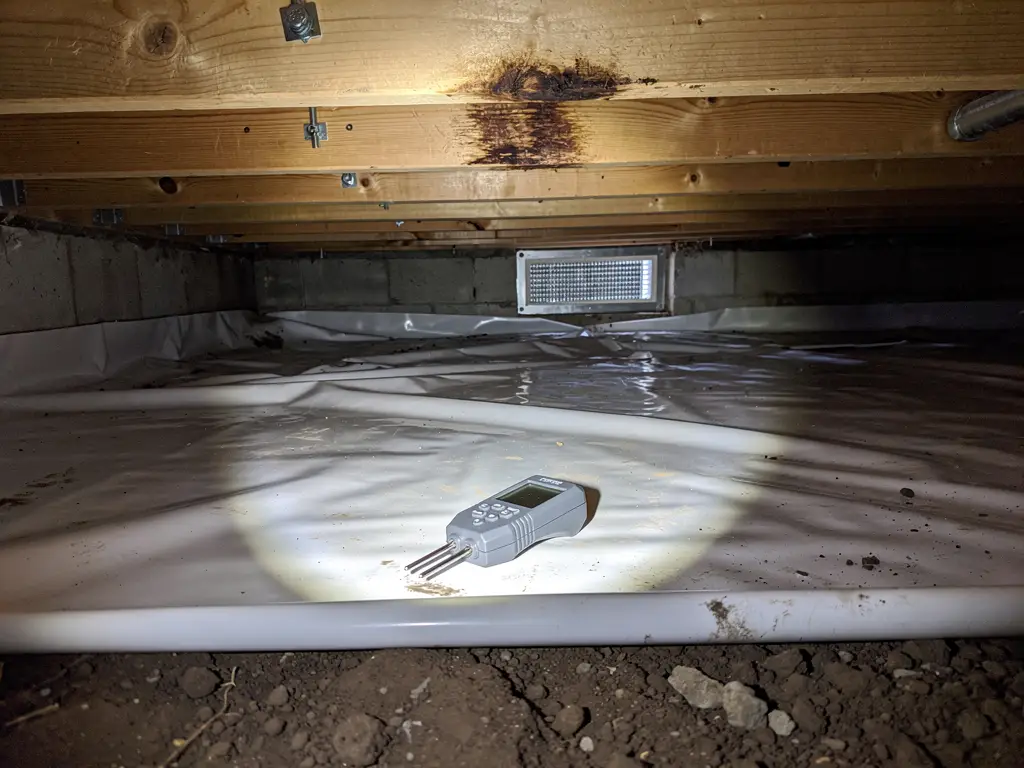
Illustrative image of moisture checking under a building: a white vapor barrier over soil and a handheld moisture meter under a work light
Remediation as a sequence, with the attic photographed throughout
Attic remediation at HOA Services covers the full range: moisture and mold, rodent and pest damage, decontamination of fouled insulation, and removal of the odor that lingers after both. A technician is dispatched to assess first, and what the attic actually shows decides the scope. The account executive, your one point of contact, relays the findings before anything is torn out.
The method follows the cause. Wet or soiled insulation comes out, droppings and debris are cleaned away, and surfaces are treated where contamination is present. Pest entry points and damaged framing are noted so the repair deals with how the animals got in, not just what they left behind. Airflow matters as much as cleaning, because a clean attic that cannot vent will condense again.
Technicians take before, during and after photos, procure the materials the repair needs, and haul off the debris when they finish. If the assessment turns up rotted framing or sheathing, the carpentry crew in the same repairs division can pick it up under the same job ticket, so the board deals with one vendor and one thread of communication.
A scheduled look, so the next attic problem is small
Once an attic has been remediated, the useful follow-up is a calendar entry. The account executive builds the property's annual maintenance calendar, and an attic inspection can sit in it beside the spring roof, gutter and downspout work. Clear gutters and healthy roof drainage keep water off the building envelope that the attic depends on.
Each visit ends the same way: the account executive emails status with photo documentation, so the manager can forward a record to the board without writing anything up. If the inspection finds early moisture, a vent blocked by insulation, or fresh sign of pests, it becomes a job ticket with a free proposal, scheduled around residents' access.
For HOA communities and multifamily buildings across the Willamette Valley, the aim is to keep attic work uneventful. Tenant and resident notices can go out in advance when access is needed, the work is invoiced by property once the job ticket closes, and the people who remediated the space are the ones who check it next season.
HOA Services: Oregon CCB 208889 · Washington CCB COMMUMS842JQ. Call (503) 620-8386.