Repairs · Crawl Spaces
Crawl Space Remediation & Vapor Barrier Replacement
Crawl space cleaning, moisture and pest remediation and vapor barrier replacement for multifamily and commercial buildings around Portland and Vancouver.
The air under the building is the air in the building
A large share of the air inside a building rises up through the crawl space. When the space below is dark, damp and ignored, mold, mildew and pests get established, and the odor and humidity move upstairs with the airflow. Residents notice a musty smell, a cold floor, or higher heating bills before anyone has looked underneath.
In the Pacific Northwest the moisture comes from two directions: groundwater rising through the soil, and humid air coming in through the vents. The vapor barrier laid over the soil is the first defense. Once it is torn, displaced or missing, the ground evaporates freely into the space and the joists, insulation and subfloor start to take it on.
Typical signs underneath include damp or stained joists, sagging or fallen insulation, droppings and nesting, and standing water after storms. None of it is visible from the parking lot, which is why crawl space problems tend to be found when a flooring repair or a plumbing visit sends someone down there.
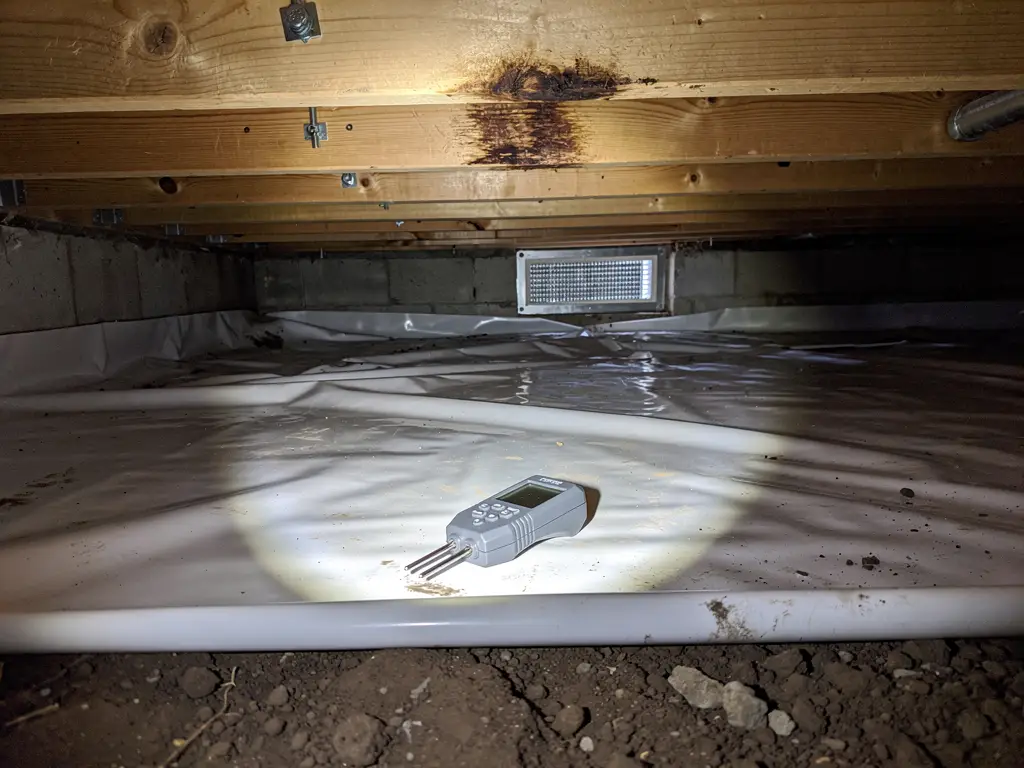
Illustrative image of a crawl space with a white vapor barrier over soil, a damp-stained joist and a handheld moisture meter under a work light
Cleaning out the contamination, then relaying the barrier
Remediation removes damage and contamination from moisture and pests through a thorough cleaning of the space. The technician starts by looking for the source: a leaking line, a downspout discharging at the foundation, a vent letting in damp air. Cleaning without a fix for the source tends to be repeated the following wet season.
Vapor barrier replacement is the other half. Small rips and exposed patches can be patched, but where soil is exposed across larger areas a new barrier laid across the whole space is the better repair. Damaged or soaked insulation is removed and replaced where needed. Pest evidence is cleaned up and the entry points noted.
The work runs through a job ticket like any repair. The account executive gathers the details, may dispatch a technician to assess, and arranges access with the manager. Technicians photograph the space before, during and after, which matters here more than most places, because nobody else will ever see what the crawl space looked like.
Putting the crawl space on the maintenance calendar
A crawl space that has been remediated should still be looked at on a schedule. The account executive can place an inspection on the property's annual calendar, and crawl space and basement inspections can be done alongside seasonal work. Catching a torn barrier or a damp joist early keeps the next visit small.
Drainage above ground does a lot of the work below it. Clean gutters and downspouts that discharge away from the foundation, pressure washing that keeps grade areas clear, and winterization before the heavy rains all reduce how much water the crawl space has to deal with. Those items live on the same calendar under the same account executive.
Each inspection or repair ends with the account executive's status email and photo documentation, which gives a manager a dated record of the space below the building. For multifamily and HOA properties across Portland and the Willamette Valley, that record is the evidence behind any later decision on insulation, ventilation or a full barrier replacement.
HOA Services: Oregon CCB 208889 · Washington CCB COMMUMS842JQ. Call (503) 620-8386.